










You plan the pause, clear the evening, and finally sit down, yet instead of unwinding your mind keeps replaying unfinished tasks, future plans, and quiet reminders of everything waiting for you next. Even when life slows down on the outside, your body and brain often stay switched on.
This is not a lack of discipline or a failure to “do rest properly”. Relaxation is not something you turn on when the calendar allows it. It is a biological state your nervous system has to enter, and for many people living in constant go-mode, that state does not arrive on schedule.
Understanding what actually happens inside the body when you relax is the first step toward making it easier to unwind, without the pressure.
What Actually Has to Happen for Relaxation to Begin
Relaxation does not happen because you decide it is time. It happens when a few key systems inside the body begin to shift.
At the centre of this process is your nervous system, which is constantly balancing between two states. The sympathetic nervous system supports action, focus, problem-solving, and alertness, while the parasympathetic nervous system supports digestion, repair, emotional regulation, slower breathing, and the ability to feel present in your body.
During a busy day, the alert state naturally dominates. It helps you respond to emails, deadlines, conversations, and decisions without conscious effort.
For relaxation to arrive, the body has to receive enough signals that it is safe to downshift.
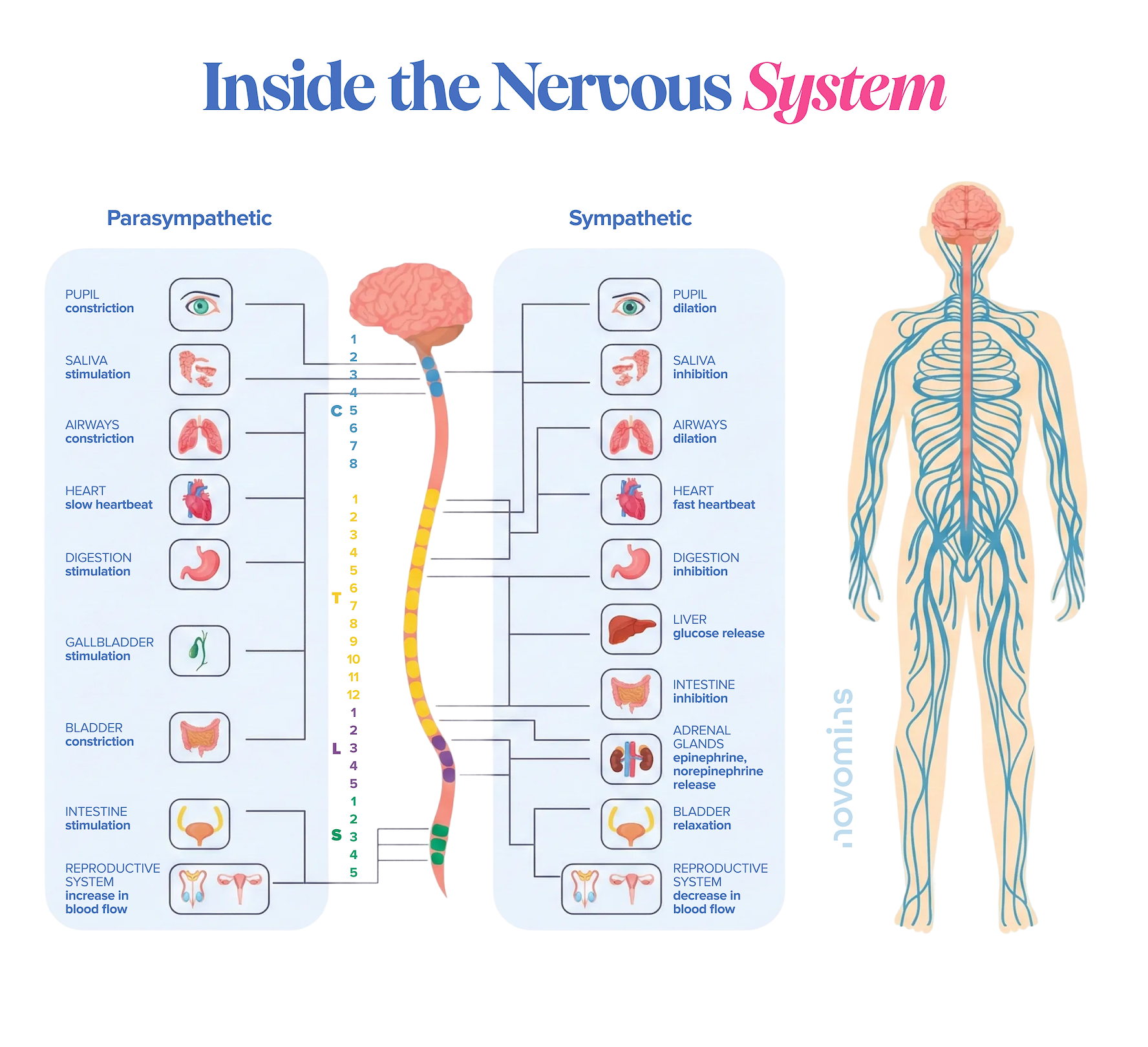
The challenge is that modern life rarely provides a clean transition. Notifications, caffeine, late nights, emotional load, and constant stimulation keep the nervous system in low-level vigilance even when you are lying still on the sofa. From the outside, it looks like rest. On the inside, the system is still scanning and bracing.
This is why relaxation often feels hardest when you finally stop. Your body has not forgotten how to unwind, but it needs repeated, gentle signals to remember that it can.
Why Relaxation Improves With Repetition, Not Pressure
Your nervous system is highly responsive. It learns from patterns, not instructions.
You do not need perfect conditions or long rituals. What helps the body downshift are small, consistent signals that communicate safety, rhythm, and release. Over time, these signals can make it easier for your heart rate to slow, your breathing to deepen, and your brain to leave constant alert mode without effort.
This is why relaxation works best when supported from multiple angles. Movement, breath, light exposure, social connection, nutrition, and mental boundaries all send slightly different messages to the nervous system, but they point in the same direction: you are allowed to soften.
Below are 10 simple, science-supported ways to support the body and mind to unwind. You do not need to do all of them. Even one or two, practiced regularly, can change how easily relaxation shows up when you need it.
10 Simple Ways to Foster Relaxation
Relaxation is not one action. It is a pattern your nervous system learns through repeated signals of safety and release.
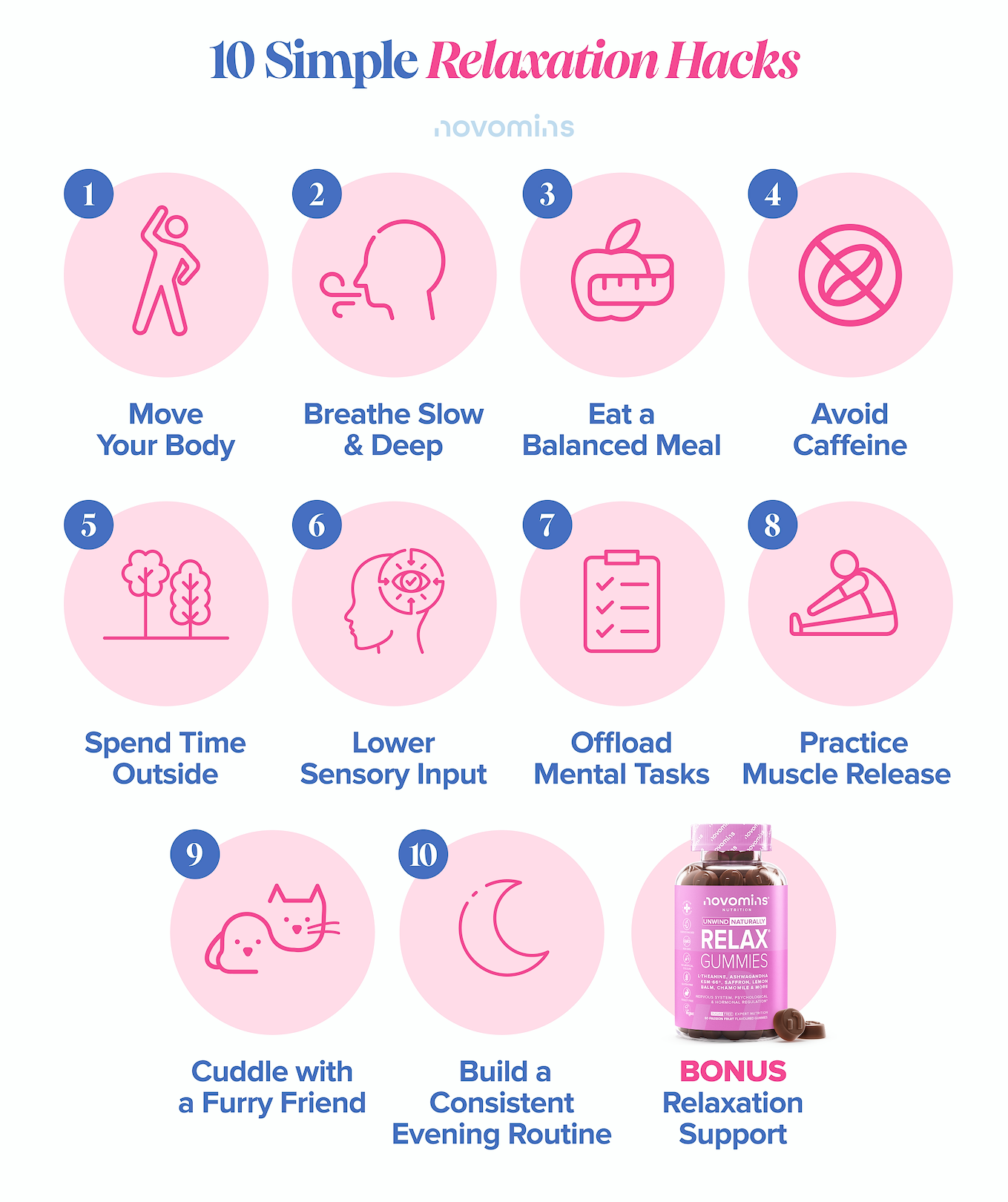
1. Move Your Body
Gentle movement can help metabolise stress hormones like cortisol and adrenaline. Walking, stretching, or light cycling signals that the immediate demand has passed, can support parasympathetic activity without overstimulation.
2. 4-7-8 Breathing
Longer exhales lower heart rate and can stimulate the vagus nerve. Even a few minutes of slow nasal breathing can shift brain activity toward calmer alpha waves. It's easy, just inhale for 4 seconds, hold your breath for 7 seconds, and exhale for 8 seconds. Repeat at least 5-10 times.
3. Eat Regularly
Blood sugar dips can be interpreted by the body as stress. Regular meals with protein, fibre, and fats can support stable energy availability, which in turn can lead to a steadier mood and easier relaxation.
4. Reduce Late Day Caffeine
Caffeine is known to block adenosine, the molecule that signals tiredness. Late intake can keep the brain alert even when the body wants to slow down, delaying relaxation and sleep quality. Aim to stop drinking caffeine after 4 PM.
5. Get outside briefly
Natural light can support circadian rhythms that control cortisol and melatonin timing. Even 10 minutes outdoors can support an easier evening wind-down. Watching the sun set is one of our favourites.
6. Lower Sensory Inputs After Sunset
Bright lights, noise, and fast content can keep the brain in beta dominance. Dimming lights and slowing input can help the brain shift toward alpha and theta activity.
7. Offload Mental Tasks
Writing things down can help minimise cognitive load. When thoughts are stored externally, the brain stops looping them for fear of forgetting. Jotting down a quick list of whatever you're dwelling on could make all the difference.
8. Practice Muscle Release
Find a place to sit that's quiet and calm and ensure you sit or lie down comfortably. Set a time limit of 5-10 minutes. While lying down, notice your body, feel your breath as it moves through your body. Then carefully focus on tightening each muscle, from your face to your feet. Hold for a few seconds, and release section by section.
9. Cuddle with a Furry Friend
Physical contact with pets has been shown to support oxytocin. Simply cuddling with a pet (or a loved one) can support the relaxation process.
10. Build a Consistent Evening Routine
Repetition teaches the nervous system what comes next. Even a short, consistent sequence helps the body anticipate rest. Creating familiar cues by shutting your laptop, changing clothes, listening to music, stretching, and even taking a long bath can help the body learn when it's time to relax.
Bonus Tip: Support relaxation from the inside
Certain nutrients and botanicals may help support normal nervous system function and psychological wellbeing. They do not sedate the brain, but help regulate stress signalling and emotional balance over time.
This is where Novomins Relax Gummies fit in.

Novomins Relax Gummies
Novomins Relax Gummies are designed for daily support, not emergency calm. They are formulated with key ingredients known to support the biological processes that allow the nervous system to move more easily between alertness and rest - all in a delightful, passion fruit flavoured, sugar-free gummy!
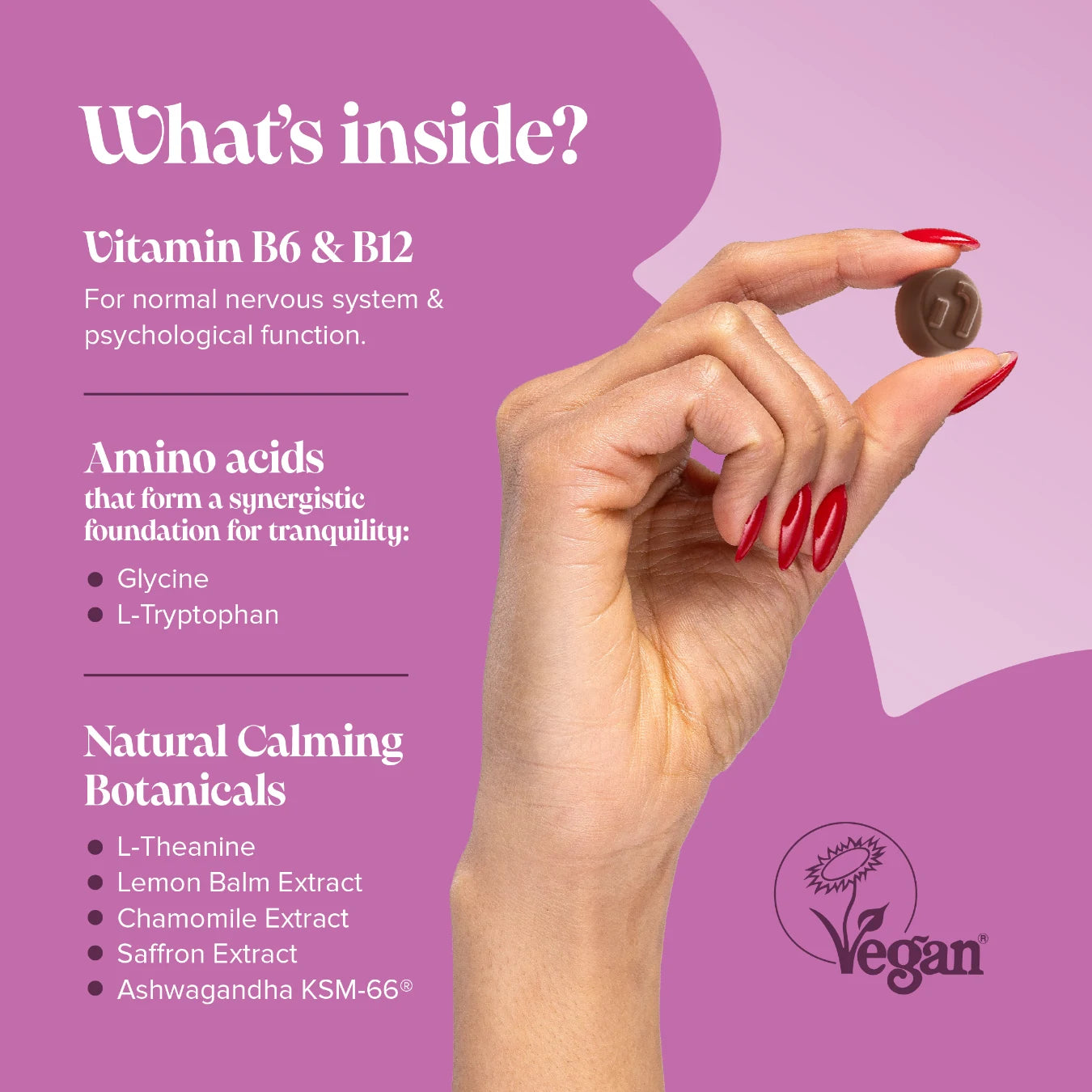
Key ingredients and why they matter
Ashwagandha
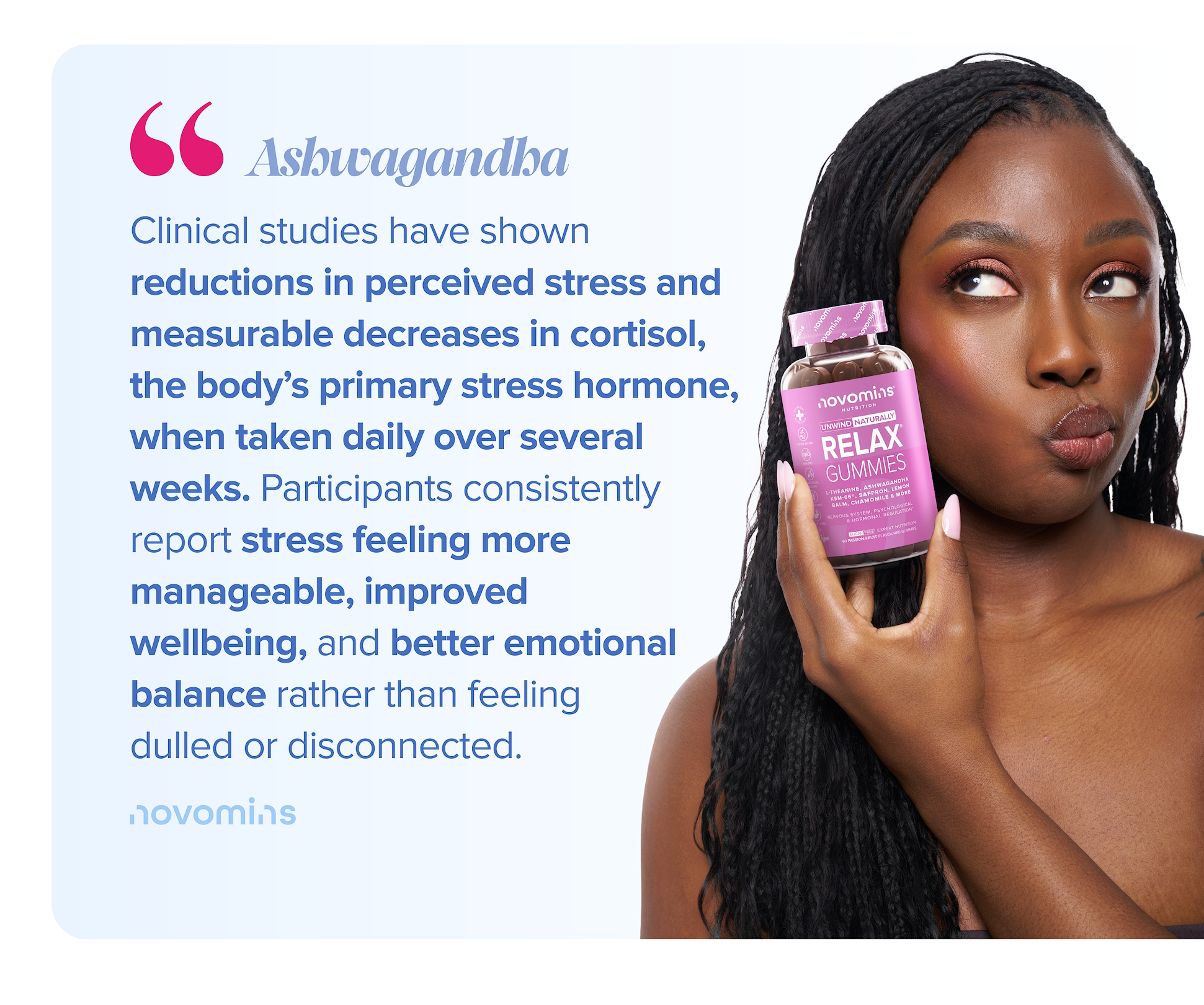
Ashwagandha is an adaptogen. Adaptogens are compounds researched for their ability to help the body adapt to ongoing physical and psychological stress rather than simply suppress symptoms.
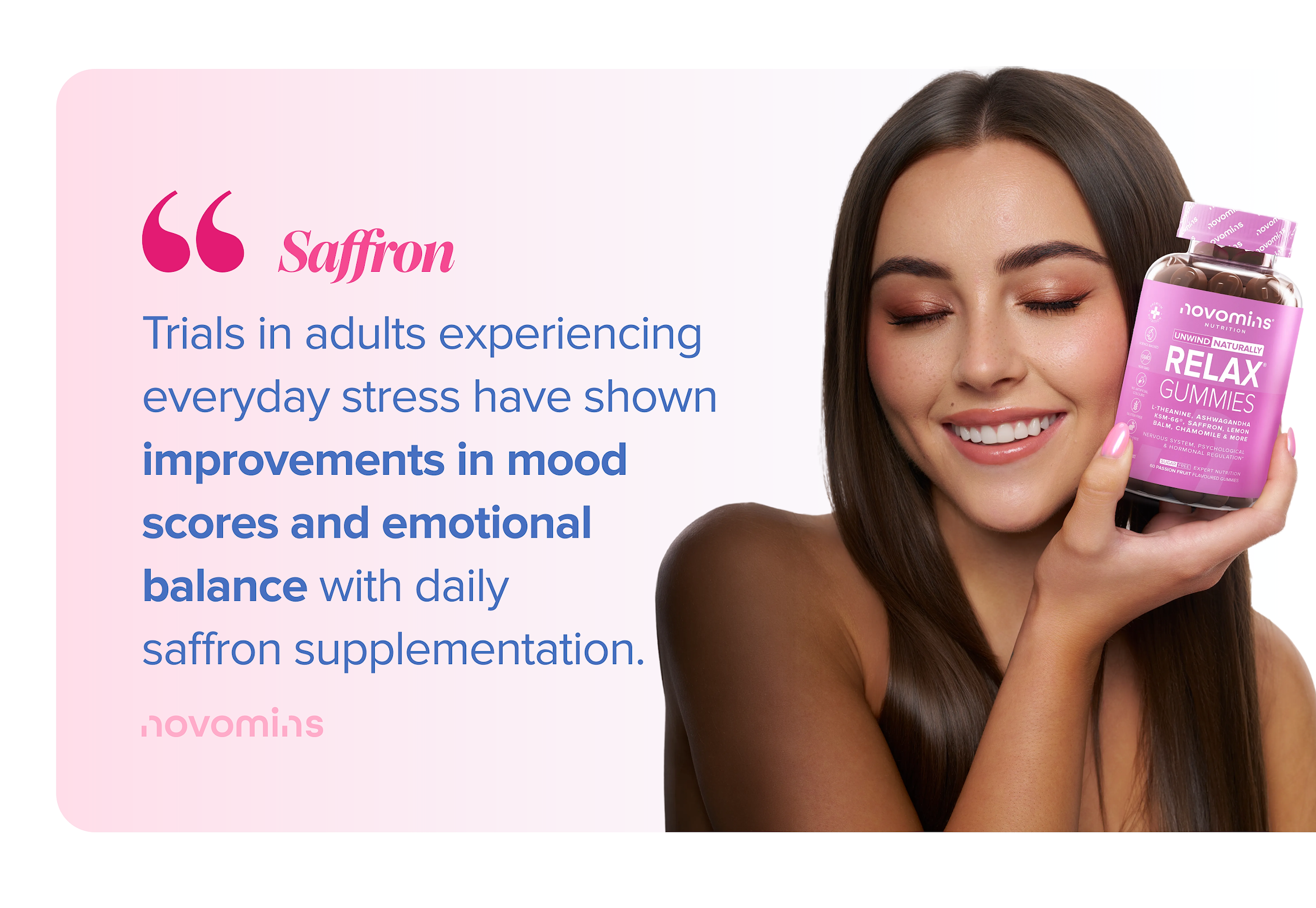
Saffron
Saffron extracts have been studied for their role in supporting emotional wellbeing, especially when stress overlaps with low mood or mental fatigue.
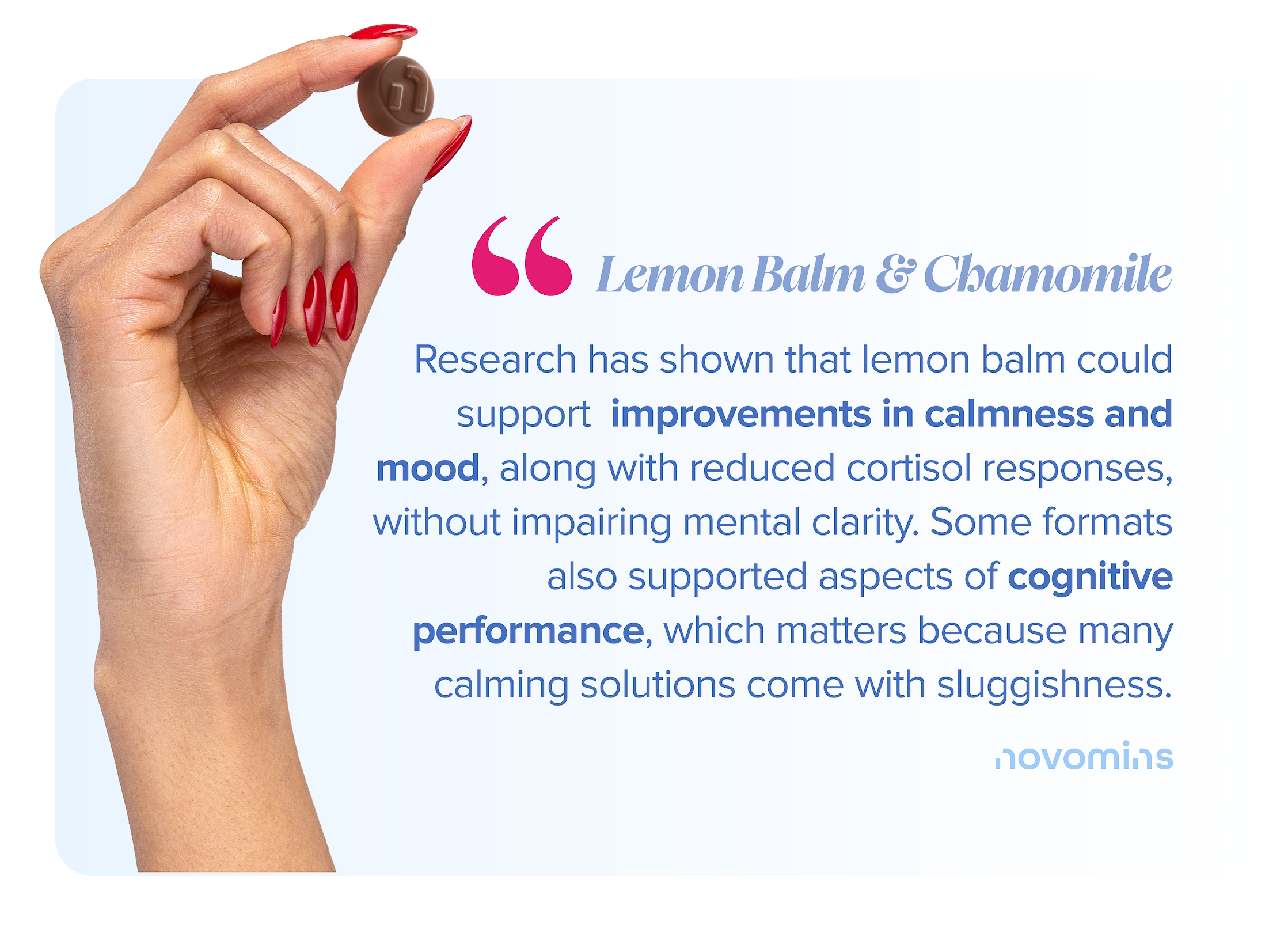
Lemon Balm & Chamomile
Lemon balm has a long history of traditional use for nervous system support.
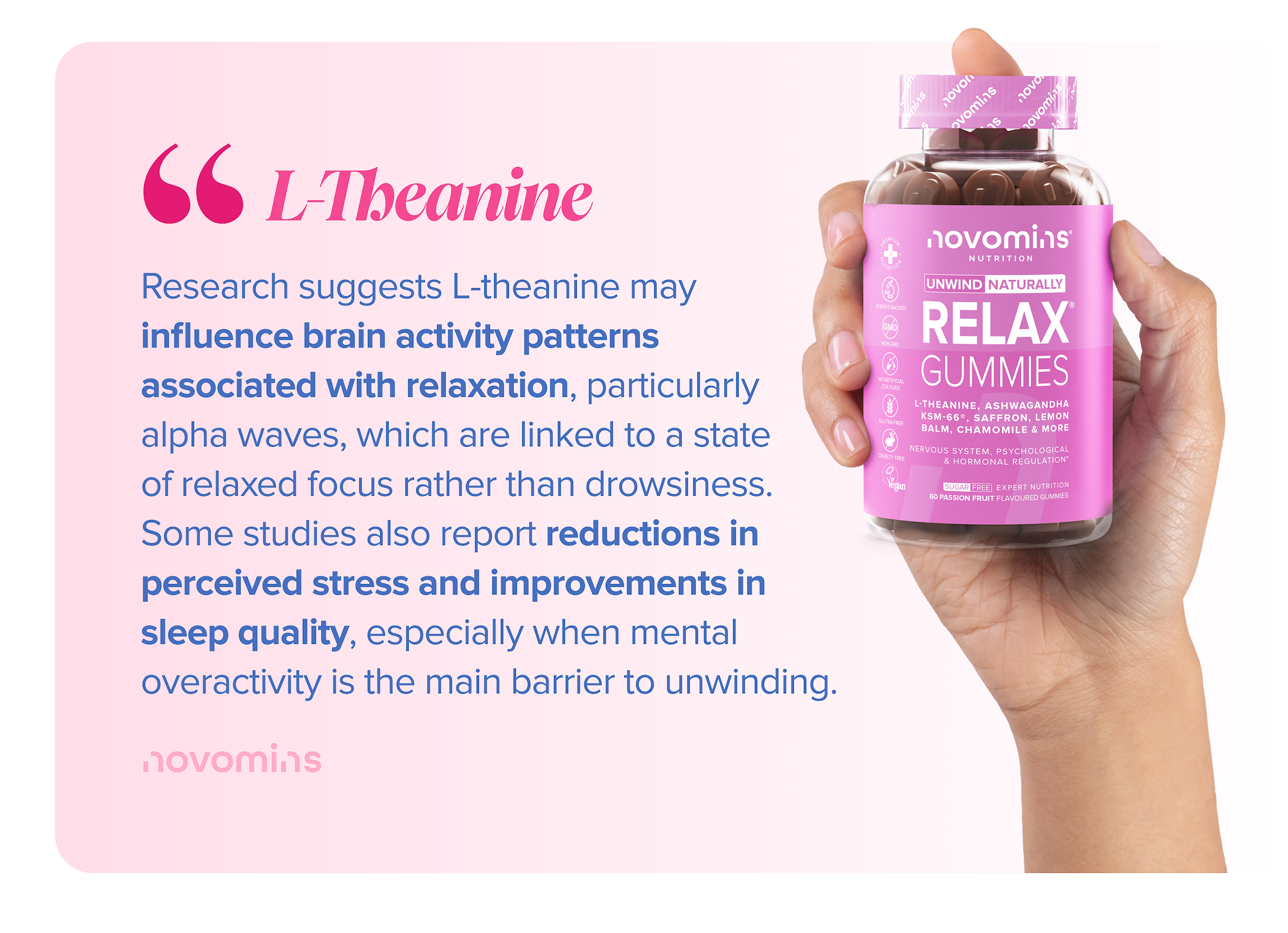
L-Theanine
L-theanine is a naturally occurring amino acid found in tea leaves.
⬇️ Scroll down to view our latest podcast on L-Theanine & brainwaves.
Glycine
Glycine acts as an inhibitory neurotransmitter in the central nervous system. It plays a role in balancing neural activity and supporting the body’s ability to downshift.
L-Tryptophan
L-tryptophan is an essential amino acid and a precursor to serotonin, a neurotransmitter involved in mood balance, emotional regulation, and feeling settled.
Vitamin B6 & B12
Vitamin B6 is essential for the production of gamma-aminobutyric acid (GABA), the brain’s main inhibitory neurotransmitter. GABA helps slow neural firing and supports the transition out of fight-or-flight mode.
Vitamin B12 supports normal nervous system and psychological function and contributes to energy-yielding metabolism. When B12 status is low, fatigue, low mood, and mental fog can make relaxation feel harder to reach. Supporting B12 can help maintain baseline nervous system resilience.
TL;DR
If you struggle to relax, it is not necessarily because you are doing it wrong. It might just be because your nervous system has learned to stay alert for a long time.
Relaxation is not a switch you flip. It is a biological state that emerges when the brain, heart, breath, and stress hormones receive consistent signals of safety and release.
Daily habits teach the body how to downshift. Nutritional support helps create the internal conditions that make that downshift easier and more reliable.
Novomins Relax Gummies are designed to support that process from the inside, as part of a daily rhythm that helps the nervous system soften, stay present, and enjoy the small moments more fully.
Because relaxation does not arrive on demand. It arrives when the body finally feels supported enough to let it in.
Video: Brainwaves & Relaxation
Want to learn more about brainwaves & relaxation? Learn more brainwaves and relaxation in the video below with pharmacologist and Novomins co-founder, Akil Memishi.
FAQ
Why can’t I relax even when I have time?
Because relaxation is a biological process, not a decision. The nervous system needs signals like slower breathing, reduced heart rate, and lower stress hormones before it can fully unwind. If your body has been in go-mode for a long time, it may take repeated cues to downshift.
Is it normal to feel more stressed on weekends?
Yes. When structure disappears, the brain often uses the extra space to process unfinished tasks and mental load. This is a nervous system response, not a sign that rest is failing.
Can guilt about resting make it harder to relax?
Yes. Feeling guilty keeps stress pathways active. The nervous system interprets guilt as pressure, which prevents the physiological shift needed for relaxation.
Can supplements help with relaxation?
Certain nutrients and botanicals have been studied for their role in supporting normal nervous system function and psychological wellbeing. They may support regulation rather than sedation.
Do relaxation supplements make you sleepy?
Well-formulated relaxation supplements are not sedatives. They are designed to support the nervous system to move more easily between alertness and rest without dulling the mind.
How long do relaxation supplements take to work?
Some people notice subtle effects within days, while others experience benefits over weeks as the nervous system adapts. Consistency matters more than timing.
What does ashwagandha do for stress?
Ashwagandha is an adaptogen studied for helping the body adapt to ongoing stress. Clinical trials show reductions in perceived stress and cortisol with daily use.
Does saffron actually help with mood?
Saffron extracts have been studied in placebo-controlled trials for supporting mood and emotional balance, particularly during periods of stress and low mood.
What is L-theanine and why is it used for relaxation?
L-theanine is an amino acid found in green tea that has been found to influence brainwave activity linked to relaxed alertness. Think, calm focus without sedation.
Why are chamomile and lemon balm included?
Both botanicals have human research supporting their use for nervous system support, mood balance, and perceived stress, especially with consistent use.
Who are Relax Gummies best for?
They are designed for people who feel switched on most of the time, struggle to unwind on schedule, or want daily support for nervous system balance and emotional regulation.


